 Business License

Slotted Liner vs. Perforated Liner: Optimizing Your CBM Well Completion Strategy
Coal Bed Methane (CBM) extraction is a complex process that hinges on one critical decision: well completion. The method you choose directly impacts gas production rates, operational longevity, and overall project economics. Among the most common and effective completion techniques are slotted liner and perforated liner installations.
But how do you choose? At Mindeoil, we specialize in advanced well completion solutions. This guide breaks down the key differences, advantages, and ideal applications for both methods to help you design the most efficient CBM well completion.
Why Well Completion Design is Critical for CBM
Unlike conventional gas reservoirs, methane in coal seams is stored through adsorption onto the coal surface. To produce it, reservoir pressure must be reduced by dewatering, allowing the gas to desorb and flow into the wellbore.
A poorly designed completion can lead to:
Sand and fines production: clogging the wellbore and surface equipment.
Coal failure: causing formation damage and collapse.
Inefficient dewatering: hindering gas desorption and reducing peak production.
The primary goal of any CBM well completion is to support the wellbore while maximizing inflow area and controlling the unwanted influx of formation solids.
The Slotted Liner: A Popular Choice for Sand Control
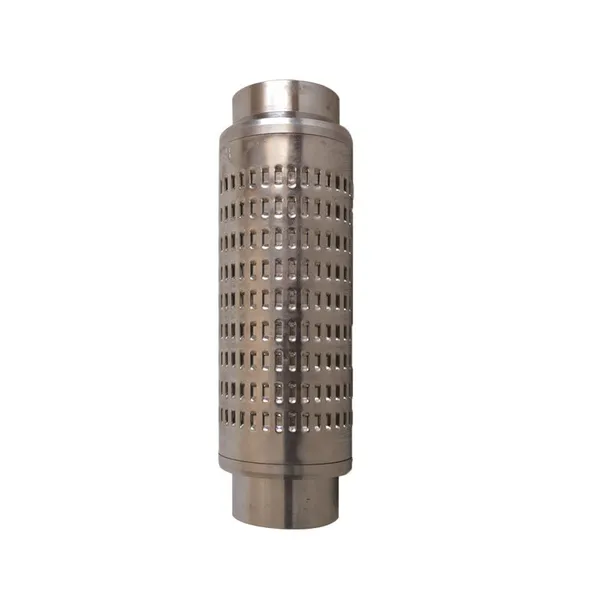
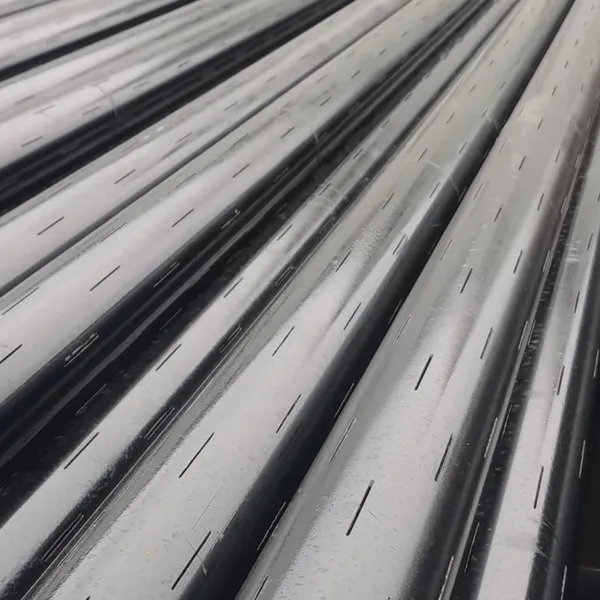
A slotted liner is a continuous pipe with precisely cut slots machined along its length. The slot size, pattern, and density are custom-designed based on the specific characteristics of the coal formation.
Advantages of Slotted Liners:
Excellent Sand Control: The primary benefit. Carefully engineered slot widths filter out formation sand and fine coal particles while allowing water and gas to pass through.
Large Inflow Area: Provides a extensive open area for fluid flow, facilitating efficient dewatering.
Mechanical Stability: Provides crucial mechanical support to the wellbore, preventing collapse in friable coal seams.
Cost-Effective: Often a more economical solution compared to other sand control methods like standalone screens.
Considerations:
Slot Plugging: In formations with very high fines content, micro-slots can become plugged over time, requiring cleaning or stimulation.
Design Specificity: Slot size must be meticulously chosen based on detailed particle size distribution (PSD) analysis of the formation.
The Perforated Liner: Maximum Borehole Access
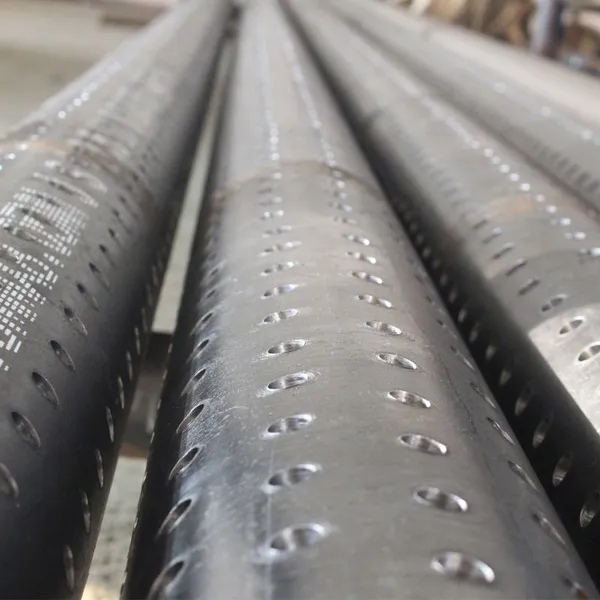
A perforated liner is a solid casing that is run into the wellbore and then cemented in place. Once the cement is set, shaped charge perforating guns are used to blast holes (perforations) through the casing, cement, and into the coal formation at designated depths.
Advantages of Perforated Liners:
Zonal Isolation: The cementing process provides complete zonal isolation. This allows operators to target specific coal seams accurately and isolate unwanted water zones or unstable formations.
Selective Stimulation: Perfect for wells requiring hydraulic fracturing. Perforations provide defined entry points for frac fluid to target specific zones effectively.
Structural Integrity: The cemented casing provides the highest degree of wellbore support, ideal for very weak formations.
Considerations:
Limited Inflow Area: The total open area for flow is significantly less than a slotted liner, which can be a limiting factor for production.
Risk of Formation Damage: The perforating process can create a crushed zone around each perforation tunnel, impairing permeability near the wellbore. This often requires subsequent stimulation to clean up the damage.
Higher Cost and Complexity: The process is more time-consuming and involves additional steps (cementing, perforating), increasing upfront costs.
Slotted Liner vs. Perforated Liner: A Quick Comparison
Feature | Slotted Liner | Perforated Liner |
Primary Function | Sand Control & Wellbore Support | Zonal Isolation & Targeted Access |
Inflow Area | Very High | Limited |
Sand Control | Excellent (if designed correctly) | Relies on gravel pack or formation strength |
Zonal Isolation | Difficult | Excellent |
Ideal For | Homogeneous seams, high fines, friable coal | Multi-seam wells, required fracturing, aquifers |
Operational Complexity | Lower | Higher |
Relative Cost | Generally Lower | Generally Higher |
Making the Right Choice for Your CBM Project
The "best" CBM completion method is not universal; it depends entirely on your reservoir's geology.
Choose a Slotted Liner if your primary challenges are sand production and wellbore stability in a relatively homogeneous coal section. It’s a robust, cost-effective solution for many CBM basins.
Choose a Perforated Liner (cased & perforated) if you need to isolate multiple zones, perform targeted hydraulic fracturing, or avoid nearby aquifers. It offers superior control for complex well profiles.
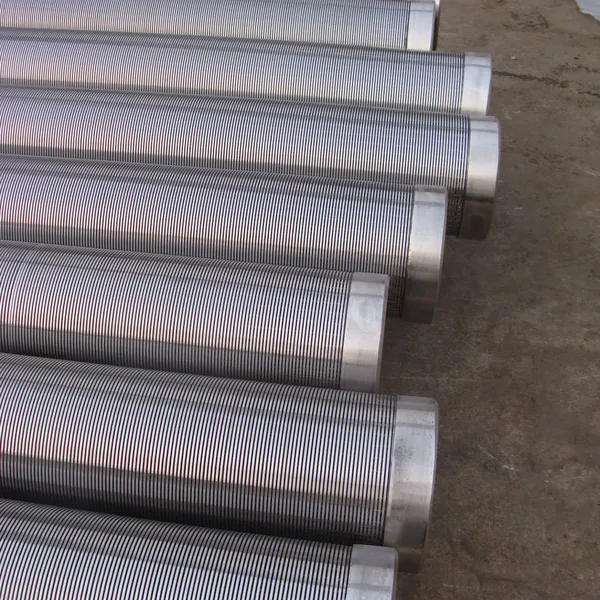
Pro Tip: Advanced options like pre-packed screens or wire-wrapped screens can also be considered for extreme sand control scenarios.
Partner with Mindeoil for Expert CBM Well Completion
Choosing between a slotted or perforated liner is a decisive step in your well design. It requires a deep understanding of reservoir mechanics and practical field experience.
At Mindeoil, we don't just supply high-quality slotted liners and perforated liners; we provide integrated CBM well completion solutions. Our engineering team works with you to analyze your formation data and recommend the optimal design for maximizing production and minimizing downtime.
Ready to optimize your completion strategy?
[Contact Us Today for a Free Consultation] or [Request a Quote] to speak with our CBM experts and ensure your next well is completed for success.
Keywords: CBM Well Completion, Slotted Liner, Perforated Liner, Coal Bed Methane, Sand Control, Wellbore Stability, Zonal Isolation, CBM Production, Well Completion Design, Oil and Gas Solutions, CBM Engineering, Perforated Casing, Slotted Pipe, Dewatering.
Recently Posted
-
Plasma Slotted Liner: Erosion Resistance Performance — From Theory to Application Cases
June 8, 2026Plasma Slotted Liner: Erosion Resistance Performance - From Theory to Application Cases IntroductionIn the oil and gas i Read More
 -
Slotted Liner Completion in Geothermal Wells: A Game-Changer for Sustainable Energy Production
May 29, 2026Slotted Liner Completion in Geothermal Wells: A Game-Changer for Sustainable Energy Production For decades, geothermal energy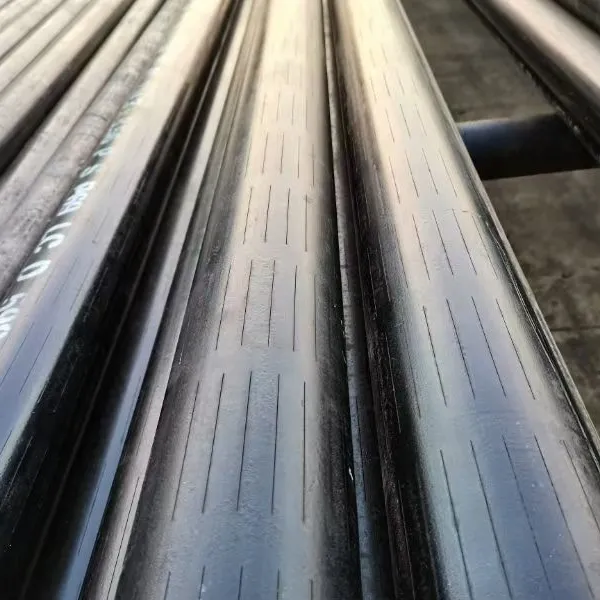 Read More
 -
Sand Control Strategies in Colombia: Optimizing Production in Challenging Formations
December 15, 2025Sand production is a critical challenge in Colombia’s oil and gas sector, particularly in geologically complex regions like the Ll Read More
 -
¿Por qué las Completaciones con Liner Ranurado son Esenciales para la Producción de Crudo Pesado en
December 5, 2025El futuro petrolero de Venezuela yace en las desafiantes y poco consolidadas arenas de los campos de crudo pesado de la Faja del O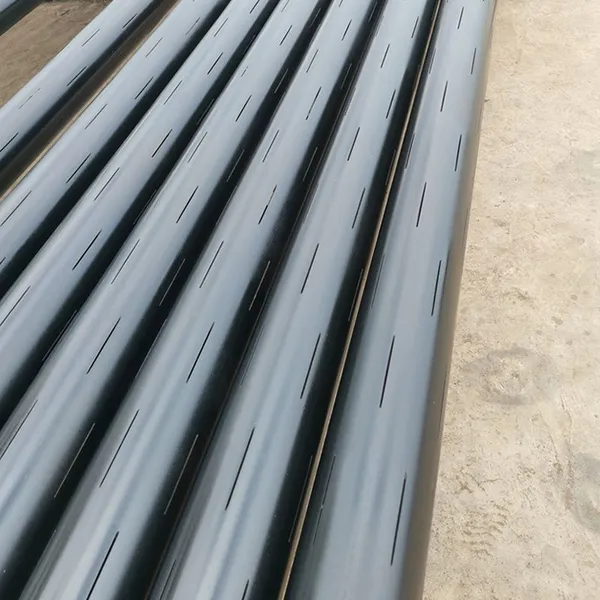 Read More

Contact Us
Recommended Products
-
 Slotted Liner Pipe – API 5CT Seamless, Precision Sand Control for Well CompletionNegotiableMOQ: 1000 Pieces
 -
Casing Pup Joint PipeUS$ 1000 - 3000MOQ: 25 Tons
-
2-7/8'' EU J55 Tubing Pup JointUS$ 30 - 100MOQ: 10 Pieces
-
Oilfield Oilwell Tubing Pipe for Oil and GasUS$ 30 - 100MOQ: 10 Pieces
-
Oil Well Tubing Pup JointUS$ 30 - 100MOQ: 10 Pieces

-
Sand Control Slotted Liner/ TUBERÍA RANURADAUS$ 30 - 300MOQ: 100 Meters
-
Pup Joint CasingUS$ 1000 - 3000MOQ: 25 Tons
-
L80 Tubing Pup Joint C/W CouplingUS$ 30 - 100MOQ: 10 Pieces
-
Downhole Wire Wrapped ScreenUS$ 30 - 100MOQ: 100 Meters
-
Casing Pup Joint API Spec 5CT Casing Pup JointUS$ 1000 - 3000MOQ: 25 Tons
-
P110 Tubing Pup JointUS$ 30 - 100MOQ: 10 Pieces
-
Oil Well Oilwell Tubing Pipe for Oil and GasUS$ 30 - 100MOQ: 10 Pieces
-
Premium Metal Mesh Screen Pipe for Oilfield Sand ControlUS$ 30 - 100MOQ: 100 Meters
-
TUBERÍA RANURADA for Venezuela Maracaibo Lake Oilfield Heavy Oil ProductionUS$ 30 - 300MOQ: 100 Meters
-
Downhole Sand Control Slotted LinerUS$ 30 - 300MOQ: 100 Meters

-
Pipe Based Wire Wrapped Screen WWS Johnson Screen Pipe Bridge ScreenUS$ 30 - 100MOQ: 100 Meters
-
TUBERÍA RANURADAUS$ 30 - 300MOQ: 100 Meters
-
Pup Joint CasingUS$ 1000 - 3000MOQ: 25 Tons
-
Perforated Casing Pipe Perforated Liner Pipe Best Manufacturer in ChinaUS$ 30 - 100MOQ: 100 Meters
-
Pup Joint Manufacturers With Upset Tubing Pup Joint StockUS$ 30 - 300MOQ: 20 Pieces